Due to a recent change in our pharmacy software system, the process for submitting refill requests online has now changed.
Our previous mobile app and your current login credentials will no longer work.
Please click the Refill Online tab to begin the new process.
Thank you for your patience during this transition.

Get Healthy!
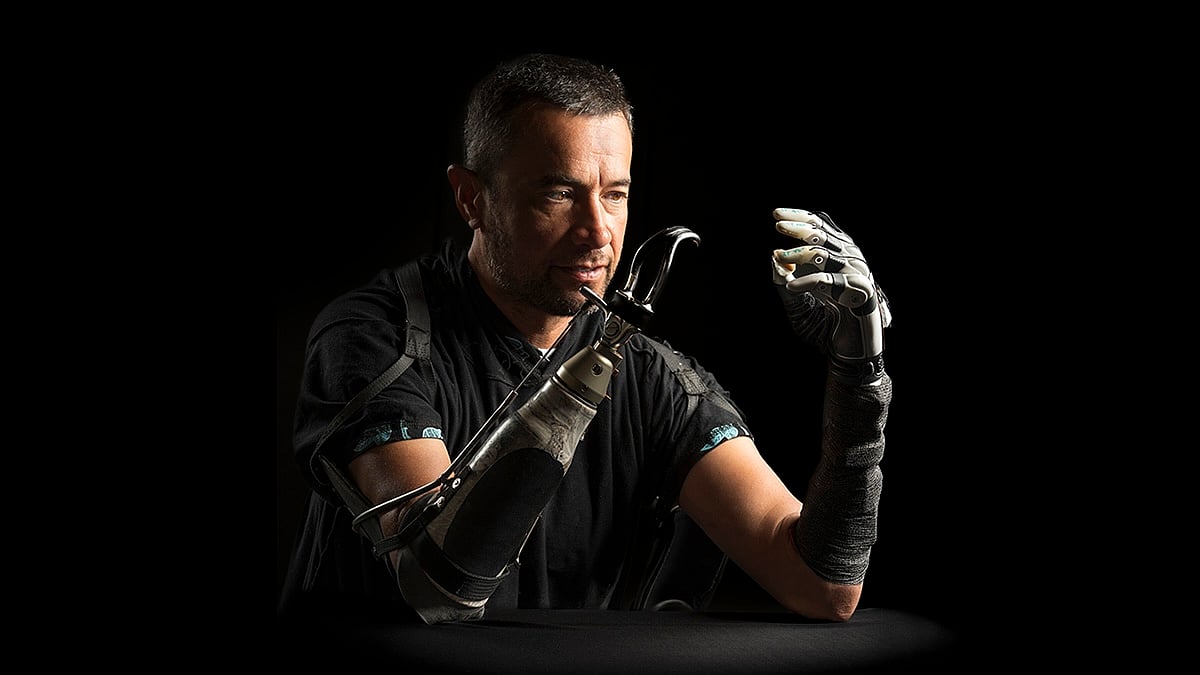
- Posted December 12, 2025
Improved Bionic Hand Has A Mind Of Its Own, Researchers Say
The best way to improve amputees’ control over a bionic hand is to give the hand a mind of its own, a new study argues.
A bionic hand that’s controlled by an artificial intelligence (AI) program, but under the direction of the amputee, provides the best approximation of normal hand dexterity, researchers said Dec. 9 in the journal Nature Communications.
“As lifelike as bionic arms are becoming, controlling them is still not easy or intuitive,” said lead investigator Marshall Trout, a postdoctoral researcher at the University of Utah NeuroRobotics Lab in Salt Lake City.
“Nearly half of all users will abandon their prosthesis, often citing their poor controls and cognitive burden,” Trout added in a news release.
The problem is that so much of normal hand movement is unconscious and intuitive, researchers said. You don’t need to consciously instruct each finger where they need to get a proper grip on a coffee mug, a ballpoint pen or a bowling ball.
But robot prosthetic hands and arms require just such an effort from amputees, who must purposefully think about each finger as they try to grasp something, researchers said.
To solve this problem, researchers turned to AI. They trained it to respond to proximity and pressure sensors in a bionic hand to form specific pre-programmed grasping postures.
The pressure sensors are so fine they can detect an effectively weightless cotton ball falling on them, researchers said. Meanwhile, the proximity sensors help each finger “see” the object in front of it, allowing the AI to form a perfect, stable grasp.
Amputees then guide the AI, sharing control with it to make the hand function as needed, researchers said.
"What we don’t want is the user fighting the machine for control. In contrast, here the machine improved the precision of the user while also making the tasks easier,” Trout said. “In essence, the machine augmented their natural control so that they could complete tasks without having to think about them."
Researchers tested their bionic hand with four volunteers whose amputations fall between the elbow and the wrist.
The test subjects all demonstrated better grip security and better grip precision when using the bionic hand, while needing less mental effort to control the prosthesis, researchers reported.
They were able to perform numerous everyday tasks like picking up small objects or raising a cup, researchers said.
That’s not as easy as it sounds, researchers noted. Squeeze too softly on a plastic cup and you’ll drop it; too hard, and you’ll crush it.
“By adding some artificial intelligence, we were able to offload this aspect of grasping to the prosthesis itself,” senior researcher Jacob George, a professor of engineering at the University of Utah, said in a news release.
“The end result is more intuitive and more dexterous control, which allows simple tasks to be simple again,” he said.
The team is now exploring brain implants that can allow amputees to control prosthetics with their mind, and even get a sense of touch from the pressure sensors in the hand, George said.
More information
The Cleveland Clinic has more on prosthetics.
SOURCE: University of Utah, news release, Dec. 5, 2025


